
The amended complaint, granted by a judge on Tuesday, included allegations that Kalshi targeted users under 21 years old through social media and marketing on university campuses.
Cryptocurrency Financial News
The amended complaint, granted by a judge on Tuesday, included allegations that Kalshi targeted users under 21 years old through social media and marketing on university campuses.

Tokenization and RWA TVL growth highlight Ethereum’s fundamentals, but stagnant DApps and spot ETF outflows keep the pressure on ETH price.
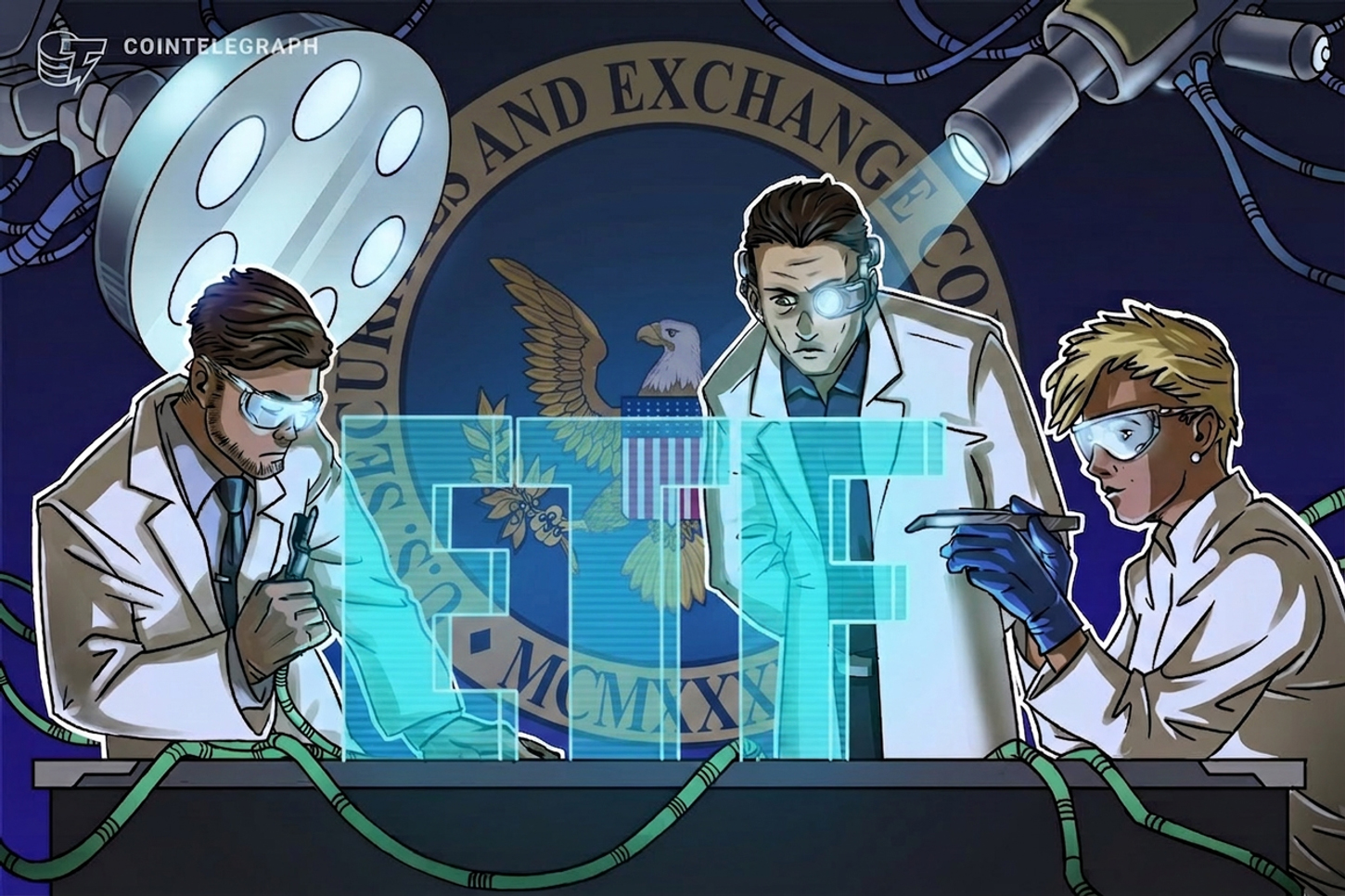
The request from the US agency seeks feedback on how emerging ETF structures and investment strategies should be regulated as issuers roll out increasingly specialized products.
A new study from Ramp found companies making the biggest investments in AI are expanding their workforces, with heavy adopters increasing headcount by about 10% and entry-level hiring by 12%, challenging fears that generative AI is already causing widespread job losses.

The project, supported by Visa, Mastercard and many crypto companies, could be in a position to challenge Tether’s USDT and Circle’s USDC, currently the two largest stablecoins by market capitalization.

The partnership extends distribution of Nasdaq’s TotalView market data to blockchain applications and other software platforms through Pyth’s marketplace.
The Stripe- and Coinbase-backed stablecoin consortium can challenge Circle’s business model, but analysts say building a network is harder than assembling big-name partners.

Bitcoin faced downside pressure as the US dollar hit its highest levels against the Japanese yen since 1986, while BTC price analysis revealed “capitulation” by 2025 top-buyers.
TL;DR
XRP Holds $1 Support As Wallet Growth Hits Three-Month High. The update comes from Coindesk, with the core claim checked against XRP Ledger Explorer (XRPScan) Address Charts / CoinGlass Liquidation Database. That matters because this is the sort of story that can quickly become noisy if it is treated as a simple price headline rather than a market-structure development.
Confirmed XRP network addresses grew at their fastest average pace since March 2026, helping defend the key $1.00 level during a leverage shakeout that flushed long open interest. The clean read is not that one data point should dominate the whole market, but that the latest signal gives traders a better sense of where risk appetite is shifting. In a market still being driven by ETF flows, leverage, treasury decisions and rotating altcoin liquidity, context is doing a lot of work.
XRP’s $1 level is simple, visible and psychologically important. The stronger part of the story is that wallet growth reportedly improved while leverage was being flushed from the market. That gives traders something more useful than a round-number headline: it shows whether network participation is holding up while speculative positioning resets.
The practical takeaway is that this is not just about the headline asset. These stories tend to spill across related trades: Bitcoin treasury names can affect altcoin sentiment, ETF flow data can shape institutional positioning, and token-specific network metrics can change how traders think about support, demand and supply. When liquidity is thin, those second-order effects can matter almost as much as the original news.
Highlight that the $1.00 support is psychological and volatile; avoid implying a guaranteed rally from here. That is the line readers should keep front and center. Crypto markets are very good at taking a narrow data point and turning it into a sweeping narrative within minutes. The better read is usually more measured: this is a signal, not a guarantee.
For example, an outflow does not automatically mean long-term holders have lost conviction. A governance warning does not mean a network is broken. A token unlock does not mean every released coin is being dumped at market. And a derivatives shift does not mean price must follow in a straight line. The useful part is understanding what the signal says about positioning, confidence and incentives.
The next step is to watch whether the data keeps confirming the story. If the same pattern appears across follow-up flows, on-chain metrics, open interest, governance dashboards or official filings, it becomes a more durable market theme. If it fades quickly, it may end up looking like a short-term positioning scare rather than a structural shift.
That distinction is especially important in the current market. Traders are still trying to work out whether capital is truly leaving crypto, rotating into safer crypto assets, or simply sitting in stablecoins waiting for a cleaner entry. This story adds one more piece to that puzzle, but it should be read alongside broader liquidity, macro and derivatives conditions.
This report is based on information from Coindesk and XRP Ledger Explorer (XRPScan) Address Charts / CoinGlass Liquidation Database.
This article was written by the News Desk and edited by Samuel Rae.
Managers of exchange-traded funds, including those in the crypto sector, may see some changes at the Securities and Exchange Commission as it weighs its approach.

Bitcoin miners have the power sites AI companies need, but turning old mining campuses into real data center revenue is no easy pivot.
The crypto industry, big tech and gambling interest groups are betting big on politicians in the 2026 primaries and elections, with almost $300 million shelled out so far.
TL;DR
Whales Rotate Back To Bitcoin And Ethereum As Altcoin Risk Cools. The update comes from Tokenpost, with the core claim checked against Glassnode exchange flows / IntoTheBlock address statistics. That matters because this is the sort of story that can quickly become noisy if it is treated as a simple price headline rather than a market-structure development.
Large wallets and whales rotated capital out of high-risk altcoins into BTC and ETH, treating them as safe collateral during the altcoin leverage flush. The clean read is not that one data point should dominate the whole market, but that the latest signal gives traders a better sense of where risk appetite is shifting. In a market still being driven by ETF flows, leverage, treasury decisions and rotating altcoin liquidity, context is doing a lot of work.
Rotation back into BTC and ETH is a classic risk-off move inside crypto. It does not necessarily mean fresh money is flooding into the market. It can simply mean large wallets prefer the deepest collateral assets while smaller altcoins digest leverage and volatility.
The practical takeaway is that this is not just about the headline asset. These stories tend to spill across related trades: Bitcoin treasury names can affect altcoin sentiment, ETF flow data can shape institutional positioning, and token-specific network metrics can change how traders think about support, demand and supply. When liquidity is thin, those second-order effects can matter almost as much as the original news.
Note that this is portfolio rotation rather than net new fiat buying; it indicates a risk-off rotation within the crypto asset class. That is the line readers should keep front and center. Crypto markets are very good at taking a narrow data point and turning it into a sweeping narrative within minutes. The better read is usually more measured: this is a signal, not a guarantee.
For example, an outflow does not automatically mean long-term holders have lost conviction. A governance warning does not mean a network is broken. A token unlock does not mean every released coin is being dumped at market. And a derivatives shift does not mean price must follow in a straight line. The useful part is understanding what the signal says about positioning, confidence and incentives.
The next step is to watch whether the data keeps confirming the story. If the same pattern appears across follow-up flows, on-chain metrics, open interest, governance dashboards or official filings, it becomes a more durable market theme. If it fades quickly, it may end up looking like a short-term positioning scare rather than a structural shift.
That distinction is especially important in the current market. Traders are still trying to work out whether capital is truly leaving crypto, rotating into safer crypto assets, or simply sitting in stablecoins waiting for a cleaner entry. This story adds one more piece to that puzzle, but it should be read alongside broader liquidity, macro and derivatives conditions.
This report is based on information from Tokenpost and Glassnode exchange flows / IntoTheBlock address statistics.
This article was written by the News Desk and edited by Samuel Rae.

The majority of businesses surveyed are likely to use stablecoins within the next 12 months, while regulatory clarity remained the biggest barrier to wider adoption.
The businessman known as Miles Guo, who pushed the fraudulent H-Coin project and had close ties to Steve Bannon, was finally sentenced after his 2024 conviction.
TL;DR
For more details, visit the official Supreme Court platform.
Supreme Court Fed Ruling Puts Central Bank Independence Back In Bitcoin’s Macro Frame. The update comes from BeInCrypto, with the core claim checked against U.S. Supreme Court Docket 25A312 – Trump v. Cook Opinion. That matters because this is the sort of story that can quickly become noisy if it is treated as a simple price headline rather than a market-structure development.
On June 29, 2026, the Supreme Court blocked President Trump's immediate removal of Fed Governor Lisa Cook, ruling that Governors serve staggered 14-year terms and are protected by "for cause" removal provisions of the Federal Reserve Act. The clean read is not that one data point should dominate the whole market, but that the latest signal gives traders a better sense of where risk appetite is shifting. In a market still being driven by ETF flows, leverage, treasury decisions and rotating altcoin liquidity, context is doing a lot of work.
For crypto traders, the Fed independence angle feeds into the broader liquidity conversation. Bitcoin and other high-beta assets remain sensitive to rate expectations, Treasury yields and central bank credibility. A ruling that keeps the Fed insulated from direct political removal pressure is therefore not just a Washington story; it is part of the risk-asset backdrop.
The practical takeaway is that this is not just about the headline asset. These stories tend to spill across related trades: Bitcoin treasury names can affect altcoin sentiment, ETF flow data can shape institutional positioning, and token-specific network metrics can change how traders think about support, demand and supply. When liquidity is thin, those second-order effects can matter almost as much as the original news.
Clarify that in a separate ruling on the same day (*Trump v. Slaughter*), the Court allowed the President to fire the head of the FTC at will, signaling that the Fed remains a strict exception. That is the line readers should keep front and center. Crypto markets are very good at taking a narrow data point and turning it into a sweeping narrative within minutes. The better read is usually more measured: this is a signal, not a guarantee.
For example, an outflow does not automatically mean long-term holders have lost conviction. A governance warning does not mean a network is broken. A token unlock does not mean every released coin is being dumped at market. And a derivatives shift does not mean price must follow in a straight line. The useful part is understanding what the signal says about positioning, confidence and incentives.
The next step is to watch whether the data keeps confirming the story. If the same pattern appears across follow-up flows, on-chain metrics, open interest, governance dashboards or official filings, it becomes a more durable market theme. If it fades quickly, it may end up looking like a short-term positioning scare rather than a structural shift.
That distinction is especially important in the current market. Traders are still trying to work out whether capital is truly leaving crypto, rotating into safer crypto assets, or simply sitting in stablecoins waiting for a cleaner entry. This story adds one more piece to that puzzle, but it should be read alongside broader liquidity, macro and derivatives conditions.
This report is based on information from BeInCrypto and U.S. Supreme Court Docket 25A312 – Trump v. Cook Opinion.
This article was written by the News Desk and edited by Samuel Rae.
TL;DR
MicroStrategy’s New Bitcoin Sale Authorization Puts Altcoin Traders On Edge. The update comes from Coindesk, with the core claim checked against SEC EDGAR Database – MicroStrategy Inc. Form 8-K Filed June 29, 2026. That matters because this is the sort of story that can quickly become noisy if it is treated as a simple price headline rather than a market-structure development.
MicroStrategy officially filed an SEC 8-K on June 29, 2026, adopting a board-approved "Digital Credit Capital Framework" (Bitcoin monetization program) authorizing it to sell up to $1.25B in BTC to support its preferred stock reserves (STRC) and pay dividends, keeping a minimum cash reserve of $2.55B. The clean read is not that one data point should dominate the whole market, but that the latest signal gives traders a better sense of where risk appetite is shifting. In a market still being driven by ETF flows, leverage, treasury decisions and rotating altcoin liquidity, context is doing a lot of work.
The key distinction is authorization versus execution. A board-approved framework can change how traders price future supply risk, even before any sale happens. That is why altcoins reacted nervously: they are usually more sensitive to liquidity scares than Bitcoin itself, especially during periods of thin derivatives positioning.
The practical takeaway is that this is not just about the headline asset. These stories tend to spill across related trades: Bitcoin treasury names can affect altcoin sentiment, ETF flow data can shape institutional positioning, and token-specific network metrics can change how traders think about support, demand and supply. When liquidity is thin, those second-order effects can matter almost as much as the original news.
Do not say MicroStrategy has already sold $1.25 billion in BTC; it is an *authorization* program under specific conditions. They still hold 847,363 BTC and bought no coins between June 22 and June 28. That is the line readers should keep front and center. Crypto markets are very good at taking a narrow data point and turning it into a sweeping narrative within minutes. The better read is usually more measured: this is a signal, not a guarantee.
For example, an outflow does not automatically mean long-term holders have lost conviction. A governance warning does not mean a network is broken. A token unlock does not mean every released coin is being dumped at market. And a derivatives shift does not mean price must follow in a straight line. The useful part is understanding what the signal says about positioning, confidence and incentives.
The next step is to watch whether the data keeps confirming the story. If the same pattern appears across follow-up flows, on-chain metrics, open interest, governance dashboards or official filings, it becomes a more durable market theme. If it fades quickly, it may end up looking like a short-term positioning scare rather than a structural shift.
That distinction is especially important in the current market. Traders are still trying to work out whether capital is truly leaving crypto, rotating into safer crypto assets, or simply sitting in stablecoins waiting for a cleaner entry. This story adds one more piece to that puzzle, but it should be read alongside broader liquidity, macro and derivatives conditions.
This report is based on information from Coindesk and SEC EDGAR Database – MicroStrategy Inc. Form 8-K Filed June 29, 2026.
This article was written by the News Desk and edited by Samuel Rae.
TL;DR
Solana’s meme coin machine appears to be waking up again. New celebrity-linked tokens have reportedly reached market caps in the millions after launching through Solana’s fast-moving retail token ecosystem, pushing traders back into a corner of the market that can feel euphoric one hour and brutal the next.
The activity can be tracked through public Solana infrastructure such as Solscan, where token creation, holder activity, transfers, and liquidity movements are visible on-chain. That transparency is useful, but it should not be confused with safety. In meme coin markets, seeing the activity does not mean the activity is healthy.
There is a reason this keeps happening on Solana. The network is fast, cheap to use, and deeply wired into crypto’s retail trading culture. A new token can appear, pick up attention, migrate into a liquidity pool, and become the centre of a social-media trading rush before most people have even checked who controls the supply.
That speed is part of the appeal. For traders, Solana meme coins offer the possibility of early access, wild volatility, and a simple narrative that does not require reading a protocol whitepaper. For creators and promoters, the launch path is accessible and the attention cycle is immediate. Once a celebrity name, meme, or cultural reference catches on, liquidity can arrive very quickly.
The latest wave reportedly includes tokens reaching market caps around $13 million and $8 million during the early launch cycle. Those numbers are large enough to attract attention, but they are not proof of durable value. In this market segment, market capitalization can expand rapidly when liquidity is thin and early buying pressure is concentrated.
Celebrity tokens have history, and much of it is ugly. The previous cycle produced launches that looked unstoppable for a few days, then faded as attention moved elsewhere. Some tokens lost the bulk of their value from peak levels, leaving late buyers holding assets that had very little support once the promotional moment passed.
That is the uncomfortable truth behind the current Solana resurgence. Traders may be watching for the next explosive move, but the same mechanics that create a sudden 10x can also create a collapse. Liquidity can disappear. Early wallets can sell. Narratives can expire. And celebrity association, even when genuine, does not automatically create a sustainable crypto project.
There is also a regulatory backdrop. U.S. regulators have repeatedly warned about celebrity promotion and speculative token marketing. Even where a token launch is presented as entertainment or community culture, traders should still ask who benefits, what disclosures exist, and whether the token has any purpose beyond being traded.
Solana will probably remain the leading venue for this kind of activity because the network fits the behaviour perfectly. It is quick, inexpensive, and culturally aligned with retail experimentation. But that is not the same as saying every trend built on top of it deserves trust.
The better read is this: Solana meme coin risk appetite is alive again. That may create opportunities for fast-moving traders, but it also increases the chance of painful exits for anyone confusing market-cap screenshots with fundamentals.
This article was written by the News Desk and edited by Samuel Rae.
TL;DR
Ethereum Options Traders Pay Up For Downside Protection As Skew Turns Cautious. The update comes from Tokenpost, with the core claim checked against Deribit Options Metrics Dashboard / Block Scholes reports. That matters because this is the sort of story that can quickly become noisy if it is treated as a simple price headline rather than a market-structure development.
Confirmed that the 25-delta put-call options skew has shifted positive for early July expiries, showing options traders are paying more for short-term downside protection. The clean read is not that one data point should dominate the whole market, but that the latest signal gives traders a better sense of where risk appetite is shifting. In a market still being driven by ETF flows, leverage, treasury decisions and rotating altcoin liquidity, context is doing a lot of work.
Options markets are useful because they show what traders are willing to pay to protect against specific outcomes. When short-dated Ether skew moves toward puts, it says desks are paying up for near-term downside cover. It does not predict the future, but it does show where the market feels exposed right now.
The practical takeaway is that this is not just about the headline asset. These stories tend to spill across related trades: Bitcoin treasury names can affect altcoin sentiment, ETF flow data can shape institutional positioning, and token-specific network metrics can change how traders think about support, demand and supply. When liquidity is thin, those second-order effects can matter almost as much as the original news.
Avoid claiming options skew guarantees a price decline; portray it as a gauge of trader sentiment and hedging. That is the line readers should keep front and center. Crypto markets are very good at taking a narrow data point and turning it into a sweeping narrative within minutes. The better read is usually more measured: this is a signal, not a guarantee.
For example, an outflow does not automatically mean long-term holders have lost conviction. A governance warning does not mean a network is broken. A token unlock does not mean every released coin is being dumped at market. And a derivatives shift does not mean price must follow in a straight line. The useful part is understanding what the signal says about positioning, confidence and incentives.
The next step is to watch whether the data keeps confirming the story. If the same pattern appears across follow-up flows, on-chain metrics, open interest, governance dashboards or official filings, it becomes a more durable market theme. If it fades quickly, it may end up looking like a short-term positioning scare rather than a structural shift.
That distinction is especially important in the current market. Traders are still trying to work out whether capital is truly leaving crypto, rotating into safer crypto assets, or simply sitting in stablecoins waiting for a cleaner entry. This story adds one more piece to that puzzle, but it should be read alongside broader liquidity, macro and derivatives conditions.
This report is based on information from Tokenpost and Deribit Options Metrics Dashboard / Block Scholes reports.
This article was written by the News Desk and edited by Samuel Rae.
TL;DR
Strategy’s Bitcoin story just picked up a new wrinkle, and it is the kind of detail traders will probably argue about for weeks. The company, formerly known as MicroStrategy, has adopted a new digital credit capital framework that opens the door to potential Bitcoin sales at scale under specific corporate conditions.
The important phrase there is “opens the door.” This is not the same thing as saying Strategy has suddenly abandoned its Bitcoin thesis or started dumping coins onto the market. The company’s latest corporate filings on the SEC EDGAR database point instead to a broader capital management framework built around preferred securities, reserves, dividends, and buybacks.
For years, the market treated Strategy as the cleanest public-market proxy for leveraged Bitcoin conviction. The pitch was simple enough: raise capital, acquire BTC, hold the asset, and let the market decide whether the company deserved a premium. That simplicity is now giving way to a more layered structure.
The framework reportedly includes authorization for up to $1.25 billion in Bitcoin sales to meet corporate obligations, a higher dividend rate on STRC preferred shares, a $2.55 billion dollar reserve, and buyback programs tied to several digital credit securities as well as Class A common stock. That is a lot more than a plain “buy and hold Bitcoin” strategy. It turns the balance sheet into something closer to a Bitcoin-backed capital machine.
That may be smart treasury engineering. It may also make some Bitcoin investors uncomfortable. Once BTC becomes the asset sitting behind multiple financing structures, the market has to think not just about the company’s coin count, but about its obligations, dividend commitments, liquidity buffers, and when management might choose to monetize part of the stack.
The easiest mistake would be to turn this into a panic headline. Authorization is not execution. A company can give itself room to sell Bitcoin without selling immediately, and without signalling that it has lost faith in the asset. In fact, the reserve and buyback pieces suggest the company is trying to protect flexibility around its capital stack rather than simply walking away from BTC.
Still, the framework matters because it changes how the market may price Strategy’s Bitcoin exposure. The company is no longer just watched for how many coins it buys. Investors now have to watch whether its digital credit products trade smoothly, whether dividend obligations increase pressure on reserves, and whether Bitcoin itself remains liquid enough to support the model during stress.
For Bitcoin, the broader read is straightforward: corporate treasury adoption is maturing, but maturity is messy. The first phase was about buying BTC. The next phase is about what companies do after they have built a large position and wrapped financing products around it. Strategy is still the flagship example, but this filing shows that even flagship Bitcoin treasury plays can become more complicated than the original meme.
This article was written by the News Desk and edited by Samuel Rae.